Project case study
Clara AI
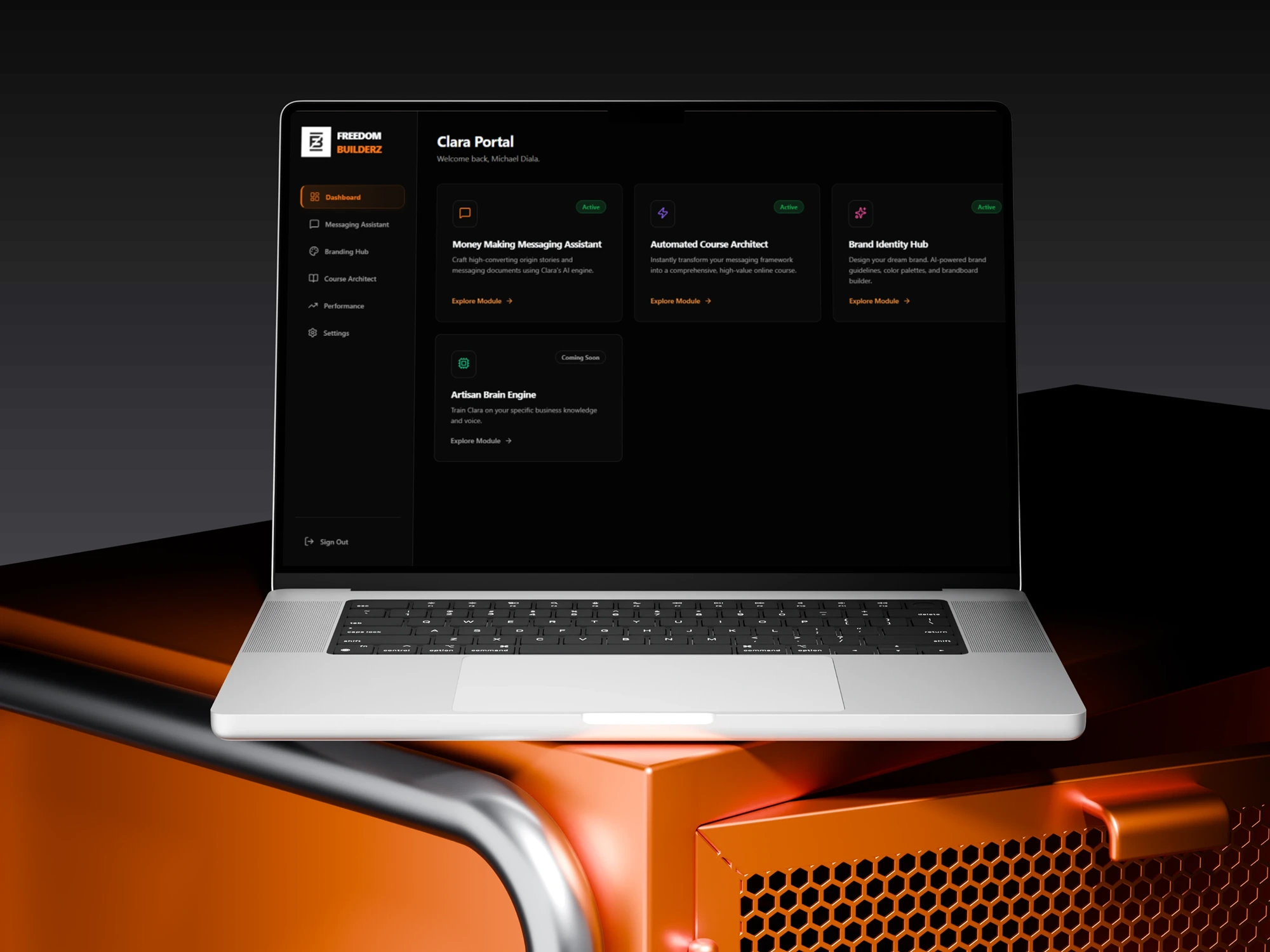
An AI-enabled coaching platform with secure user access and a workflow layer connecting OpenAI, GoHighLevel, n8n, Google Sheets, Google Docs, and Slack so model output can participate in real onboarding, lead qualification, and business processes.
Engineering case study by Jonas Viray, Full Stack Developer & AI Automation Engineer
Overview
Clara combines a secure user-facing coaching experience with an automation layer that connects OpenAI, GoHighLevel, n8n, Google Sheets, and Google Docs. The important engineering work is in the boundaries between those systems: CRM and document context move through controlled workflow steps so AI output can participate in onboarding and guidance without becoming an isolated chatbot. The same automation layer also qualifies incoming leads and notifies the team in Slack (covered separately in the automation case study). The product pairs a simple entry experience with tool-connected AI orchestration behind it.
engineering summary
Problem → Architecture → Contribution → Result
- Problem
- An AI coaching and learning experience needed a secure, simple entry point and a way to connect AI-powered guidance with business data and workflow tools rather than operating as an isolated chatbot.
- Architecture
- OpenAI is connected through n8n with GoHighLevel, Google Sheets, and Google Docs. The automation layer moves CRM and document context between systems so AI interactions can participate in real onboarding, guidance, and business workflows.
- Contribution
- Built the secure user-facing entry experience and connected the AI workflow stack so model output, CRM context, documents, and automation steps work together with clear boundaries between data, AI, and operational actions.
- Result
- The platform provides a cleaner path into personalized AI-powered guidance while demonstrating how LLM capabilities can be embedded into an existing CRM and automation ecosystem.
architecture / system boundaries
How the system fits together
Representative path for connecting AI coaching interactions to contextual CRM and document workflows.
- 01
User-facing experience
A secure entry point presents the AI-guided experience and connects the user's request to the automation layer.
- Web interface
- Access boundaries
- 02
Workflow coordination
n8n orchestrates the AI step alongside data retrieval, CRM actions and follow-up workflow tasks.
- n8n
- Webhooks
- Automation
- 03
AI and business context
OpenAI-powered interactions use relevant CRM and document context from GoHighLevel, Google Sheets and Google Docs.
- OpenAI
- GoHighLevel
- Google Workspace
- 04
Operational handoff
Workflow outputs can update CRM state and send team notifications through connected tools such as Slack.
- CRM workflows
- Slack
- Follow-ups
Engineering boundaries and reliability
- Model-generated guidance and deterministic automation steps are described separately, rather than implying AI directly controls every action.
- Sensitive lead and coaching data are excluded from the public architecture summary.
- The diagram represents connected components and responsibilities, not a claim of universal autonomous execution.
Evidence and scope: Illustrative system summary based on the documented Clara AI project and its automation case study.
AI / integration engineering notes
- OpenAI is connected with n8n, GoHighLevel, Google Sheets, and Google Docs so AI-powered guidance can participate in real business workflows.
- CRM and document data move through the automation layer to give AI interactions useful operational context instead of treating the model as a standalone chatbot.
- The system demonstrates how LLM capabilities can be embedded into an existing product and workflow stack with clear boundaries between AI, data, and automation steps.
Related service: AI Applications & Agents
Planning a system with similar complexity?
Send the requirements, current stack, and constraints. I'll outline how I would structure the system, where the main risks are, and what an implementation path could look like.
More projects
Cynergists AI
An agentic CRM where one AI, Cynessa, runs lead generation, follow-up, booking, campaigns, calls, and websites. It sits on a multi-tenant CRM with approval-gated actions, multi-provider LLM routing, real-time voice, and usage-based billing.
Innov8IT
A GoHighLevel-based IT services website with custom HTML, CSS, and JavaScript for presenting web development, automation, infrastructure, and technical service offerings.
We Breathe Success
A GoHighLevel coaching and mentorship website with custom frontend work, program pages, event flows, and Humanitix integration for a multi-offer personal-development brand.