Project case study
Active Management AI
A production backend for an AI-powered property management platform, using durable workflow orchestration to execute long-running processes across delinquency, maintenance, tenant communication, and compliance-sensitive operations.
Team project with contribution from Jonas Viray, Full Stack Developer & AI Automation Engineer
Overview
My role · Backend Developer on the Active Management AI product team, focused on backend APIs, durable workflow orchestration, scheduled execution, reliability, and testing.
AI-powered property-management operations platform that executes workflow-driven processes while keeping owners and operators in control of approvals and policy decisions.
Active Management AI is a workflow-driven property management platform designed to help owners and operators automate repetitive operational work while keeping human control over important decisions. As a Backend Developer, I worked on the execution layer behind the product, building and supporting APIs and long-running backend processes with Python and FastAPI. Temporal was used for durable workflow orchestration, allowing business processes to maintain state, handle retries, wait on timers, and continue reliably across failures. Supabase supported application data and platform services, Fly.io was used for deployment, and Pytest supported backend testing and reliability. My work focused on the backend systems that power operational automation rather than the public-facing marketing website.
engineering summary
Problem → Architecture → Contribution → Result
- Problem
- Property-management operations such as delinquency escalation, maintenance coordination, approvals, scheduled follow-ups, and tenant communication can span hours or days. Those processes need to keep moving even when an API fails, a worker restarts, a response is delayed, or execution has to wait for a future time or event.
- Architecture
- Python and FastAPI provide backend services and API endpoints, while Temporal acts as the durable workflow orchestration layer for long-running execution. Workflow state, timers, retries, task coordination, and recovery are handled through Temporal, with Supabase supporting application data and platform services, Fly.io providing deployment infrastructure, and Pytest covering backend behavior and workflow reliability.
- Contribution
- Worked as a Backend Developer on the Active Management AI product team, contributing to the core execution layer behind automated property-management workflows. The work centered on backend APIs, durable process orchestration, scheduled execution, workflow state, reliability, and testing across Python, FastAPI, Temporal, Supabase, Fly.io, and Pytest.
- Result
- The backend supports operational workflows that can run beyond a single web request, preserve progress, retry failed work, schedule future actions, and recover cleanly from interruptions while keeping operators in control of decisions that require human input.
AI / integration engineering notes
- Temporal orchestrates long-running workflows with persisted state, timers, retries, and failure recovery instead of relying only on request-response handlers or basic cron jobs.
- Python and FastAPI power backend services and API endpoints that connect operational events to durable workflow execution.
- Pytest, Supabase, and Fly.io support backend verification, data services, and production deployment.
Related service: Product Engineering & Business Systems
Key features
- Delinquency workflows with staged escalation and documented actions
- Maintenance coordination from tenant request through vendor completion
- Owner approval flows for work orders and vendor estimates
- Tenant communication through text and email without requiring a tenant portal login
- Compliance-aware workflow rules and audit-ready action trails
- Integration support for property-management platforms used by larger portfolios
From the live site
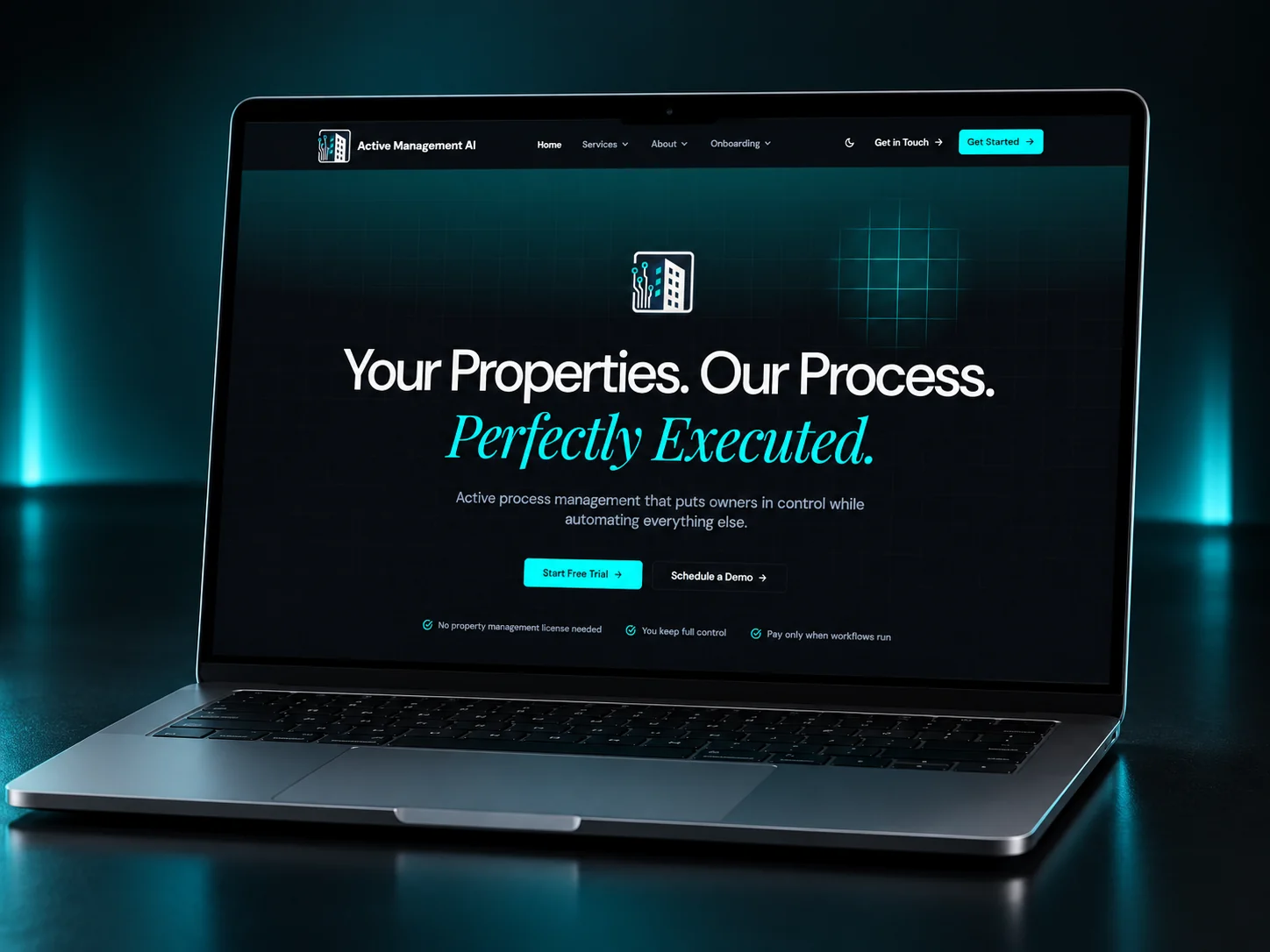
- The public product positioning emphasizes that operators keep control while the system executes repetitive workflow steps
- The site describes per-workflow pricing rather than seat-based subscription floors
- For portfolios with 100+ units, the product advertises integration with existing property-management platforms
What's on the site
- Delinquency workflows
- Maintenance workflows
- Compliance Shield
- Owner approvals
- Platform integrations
- Free pilot / onboarding
Audience · Property owners, operators, and property-management teams managing rental portfolios
Planning a system with similar complexity?
Send the requirements, current stack, and constraints. I'll outline how I would structure the system, where the main risks are, and what an implementation path could look like.
More projects
Atimonan Laundry Shop
A full booking and service-operations application covering customer scheduling, order status, payments, notifications, and staff administration, backed by Express, Supabase, Redis, and production deployment on Vercel.
Netspeak Portal
An authenticated teacher operations portal for the Netspeak ecosystem, centralizing performance visibility and day-to-day work activity with Next.js, Supabase, and Prisma.
US Fund Advisor
A production business-funding platform that combines AI analysis with account flows, financial data, payments, communications, document generation, external APIs, and multi-service infrastructure inside one end-to-end application.